Forward Head Posture: Why It Happens and Simple Ways to Improve It
Have you ever noticed in a photo that your head seems to sit farther forward than you expected? Or perhaps you've reached the end of a workday with a stiff neck and wondered if your posture has slowly changed over time.
For most people, these changes don't happen suddenly. They develop little by little through everyday routines such as working at a computer, checking a phone, reading, driving, or spending long periods in the same position. Because the process is gradual, it's easy not to notice until discomfort or fatigue becomes more apparent.
This common postural pattern is known as forward head posture. As screen time has become part of everyday life, more people have started noticing this postural pattern in themselves. it isn't usually the result of one single habit. Instead, it often reflects the way the body adapts to repeated movement patterns over time.
Although forward head posture can affect anyone, it is commonly discussed among office workers and people who spend long hours using digital devices.
If you're interested in learning how posture fits into the bigger picture of body movement, you may also enjoy reading our article on Manual Osteopathy, where we explain how different parts of the body work together to support comfortable movement and physical balance.
Small Everyday Habits Can Gradually Influence Your Posture
Our bodies naturally adapt to the positions and movements we repeat every day. That's one of the reasons we're able to learn new skills, recover from daily activities, and move efficiently throughout life. At the same time, those same adaptations can influence posture when certain positions become part of our routine.
Many people spend several hours each day sitting at a desk, looking down at a mobile phone, commuting, or working on a laptop. None of these activities are necessarily harmful by themselves. The bigger challenge is often how long we stay in the same position without changing it.
Over time, limited movement combined with repeated postures may influence how the head, neck, shoulders, and upper back naturally align. This is why posture is often viewed as a reflection of daily movement habits rather than something caused by a single activity.
Forward Head Posture Affects More Than Your Neck
Despite its name, forward head posture isn't only about the head. The neck, shoulders, upper back, spine, and hips all work together as part of one connected system. When one area gradually adapts, nearby regions often adjust as well to help maintain balance.
For that reason, people don't always notice changes in posture first. Instead, they may become aware of how their body feels during everyday activities.
Some people experience:
Neck stiffness after long periods of sitting
Tightness through the shoulders or upper back
Fatigue while working at a desk
Reduced comfort when turning the head
Occasional headaches that may be associated with prolonged postural strain
These experiences are common and can have many different contributing factors. They shouldn't be used to identify forward head posture on their own. If discomfort is persistent, severe, or continues to worsen, it's important to seek appropriate medical advice.
If much of your day is spent sitting, you may also find our article Why Sitting All Day May Lead to Neck and Shoulder Tension helpful, as it explores how prolonged sitting may influence overall comfort and movement.
There Is No Such Thing as Perfect Posture
One of the most common misconceptions about posture is the belief that there is one perfect position we should try to maintain all day.
In reality, the body generally benefits more from regular movement than from remaining perfectly still.
Think about how often you naturally shift your weight while standing or adjust your position in a chair. Those small movements are part of the body's way of staying comfortable. Trying to hold one "ideal" posture for hours can sometimes create as much tension as sitting in a poor position.
Instead of focusing on sitting perfectly, it may be more helpful to ask yourself one simple question:
"How long have I been in the same position?"
That small shift in awareness often encourages healthier movement habits without turning posture into something stressful or difficult to maintain.
Seeing Posture as Part of the Bigger Picture
Posture is only one part of how the body functions.
Daily routines, workplace setup, physical activity, stress levels, sleep quality, and movement habits may all influence the way the body feels over time. Looking at only one area rarely tells the whole story.
This broader perspective is one of the principles behind Manual Osteopathy. Rather than focusing on a single joint or muscle, it considers how different areas of the body work together to support balanced movement and overall function.
Rather than viewing forward head posture as a problem isolated to the neck, a whole-body assessment looks at how the shoulders, upper back, rib cage, pelvis, and overall movement patterns may influence posture.
Many people find that simply becoming more aware of their everyday movement habits is the first step toward making gradual, sustainable changes.
5 Small Changes That May Support Better Posture
Improving posture doesn't usually happen through one dramatic adjustment. More often, it comes from small changes that fit naturally into your daily routine. Consistency is often more valuable than trying to maintain one "perfect" position.
You might find these simple habits worth trying:
1- Move Before You Feel Stiff
It's easy to become focused on work and forget how long you've been sitting. Rather than waiting until your neck or shoulders feel uncomfortable, try standing up, walking for a minute, or gently changing your position every 30 to 60 minutes.
Small movement breaks may help reduce the feeling of stiffness that can build up during prolonged sitting.
2- Bring Your Screen Closer to Eye Level
Whether you work with a desktop monitor or a laptop, your screen position can influence how you naturally hold your head throughout the day.
A simple adjustment that brings the screen closer to eye level may encourage a more comfortable working position without requiring you to constantly think about your posture.
3- Pay Attention to Your Phone Habits
Many people spend hours each day looking down at a phone without realizing how often they repeat that position.
You don't need to avoid using your phone. Simply bringing it slightly higher from time to time or taking short breaks during longer periods of use may help reduce unnecessary strain on the neck.
4. Rethink Your Chair
Instead of investing in an expensive office chair, I often recommend trying a round massage stool.
In my experience, most office chairs—even premium ergonomic models—have a contoured seat with a slight dip. This design tends to position the knees forward and the pelvis in a way that allows the sacrum to move backward, making it easier for the spine to round and the upper body to hunch forward over time.
A round stool encourages a different way of sitting. You can place your feet comfortably and lower yourself onto the stool in a squat-like position. As you sit, let your tailbone make contact with the stool first, then gently settle the rest of your pelvis onto it. This simple adjustment helps the pelvis stay in a more neutral position, allowing the spine to stack naturally without having to consciously “sit up straight.”
Instead of relying on armrests, move your stool close enough to your desk that your forearms can rest comfortably on the tabletop. This supports your arms while allowing your shoulders to remain relaxed.
Finally, check two simple angles:
Your knees should be approximately at a 90-degree angle.
Your elbows should also be approximately at a 90-degree angle when your forearms are resting on the desk.
I encourage you to try this setup for a few days. Many of my clients and students are surprised by how naturally their posture improves and how much more comfortable they feel after making this simple change.
5- Think About Your Whole Workspace
Your chair, desk height, keyboard, mouse, and screen all influence how your body works throughout the day.
You don't necessarily need an expensive ergonomic setup. Sometimes a few thoughtful adjustments to your workspace can make everyday activities feel more comfortable.
When Might Professional Guidance Be Helpful?
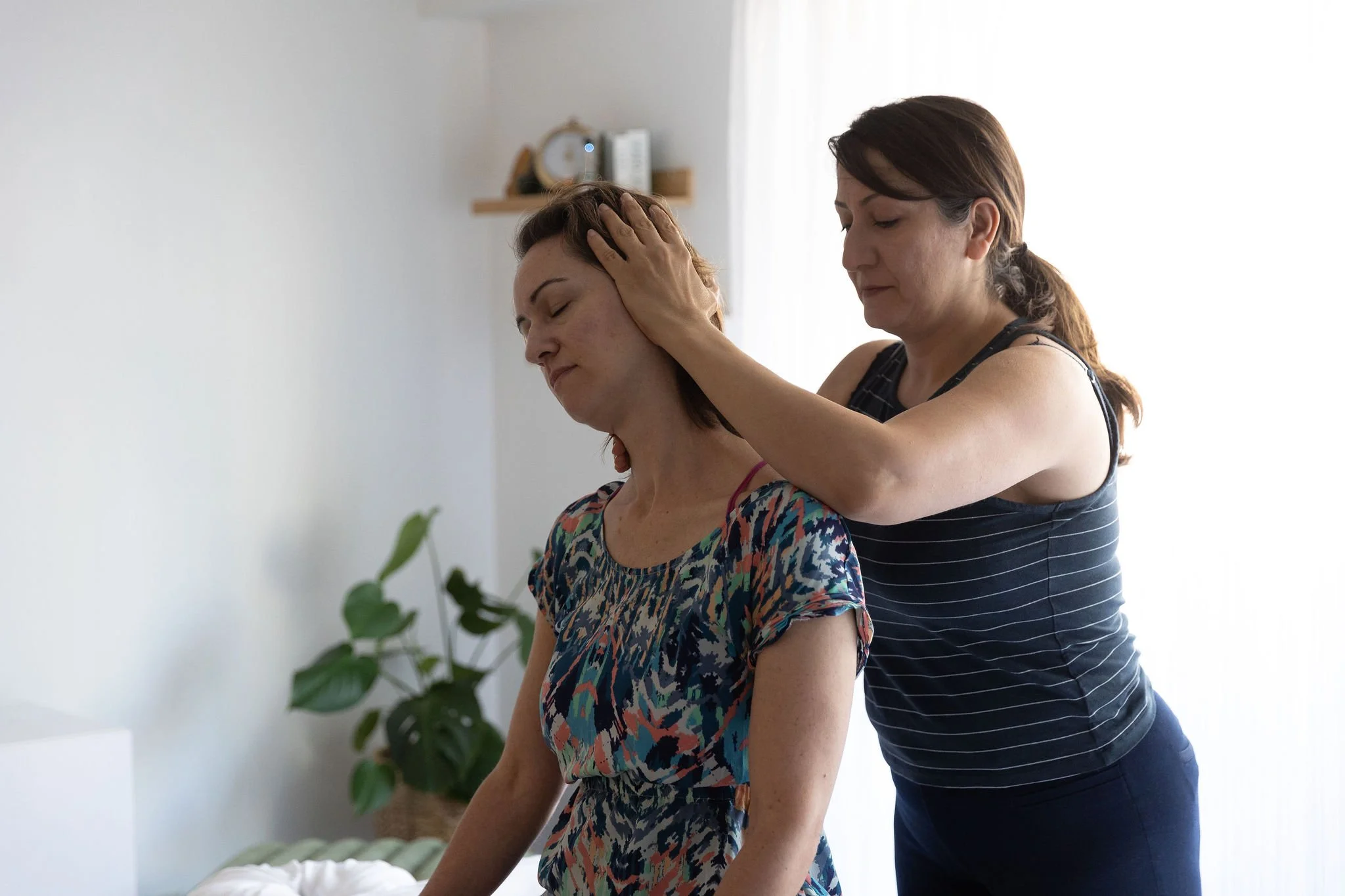
Occasional stiffness after a long day at work is something many people experience. However, if discomfort becomes persistent, repeatedly returns, or begins affecting your daily activities, it may be worth discussing your concerns with an appropriate healthcare professional.
Depending on your individual situation, they can help assess factors that may be contributing to your symptoms and recommend suitable next steps.
For people interested in learning more about movement, posture, and whole-body function, Manual Osteopathy may be one option to explore as part of a broader wellness approach.
If posture changes are accompanied by frequent headaches, you may also find our article about Headaches and Migraines helpful. Similarly, if jaw discomfort occurs alongside postural changes, our article on The Hidden Connection Between Jaw Pain, Headaches, and Posture Issues explores how these areas may sometimes be related.
Frequently Asked Questions
Can forward head posture be corrected?
Because everyone's body and daily habits are different, there isn't a single solution that works for everyone. For many people, becoming more aware of their daily movement habits, changing positions regularly, and staying physically active may help support healthier posture over time.
Can sitting all day contribute to neck discomfort?
Prolonged sitting may be associated with muscular tension and stiffness in the neck, particularly when combined with limited movement or sustained postures.
Is forward head posture only caused by using a phone?
No. Mobile phone use is only one of many factors that may influence posture. Computer work, driving, reading, daily routines, and overall movement habits may all contribute over time.
Should I worry if my posture has changed?
Not necessarily. Small postural changes are common and often develop gradually. If you experience persistent pain, significant limitations in movement, or symptoms that continue to worsen, it's important to consult an appropriate healthcare professional.
Looking at Posture from a Whole-Body Perspective
Posture is rarely about one body part in isolation. The way we sit, move, work, and recover all contribute to how our bodies function over time.
At Goldencare Wellness, Manual Osteopathy focuses on understanding how different areas of the body work together to support comfortable movement and physical balance. An individual assessment can help you better understand your movement patterns and discuss whether this approach may be appropriate for your personal wellness goals.
If you'd like to learn more, we invite you to explore our Manual Osteopathy service to learn how this approach may support your wellness goals.
Educational Disclaimer:
The information shared in this article is for educational purposes and to help you better understand your body, health, and overall wellness. It is not intended to replace medical advice, diagnosis, or treatment. If you have persistent or concerning symptoms, please consult a qualified healthcare professional.