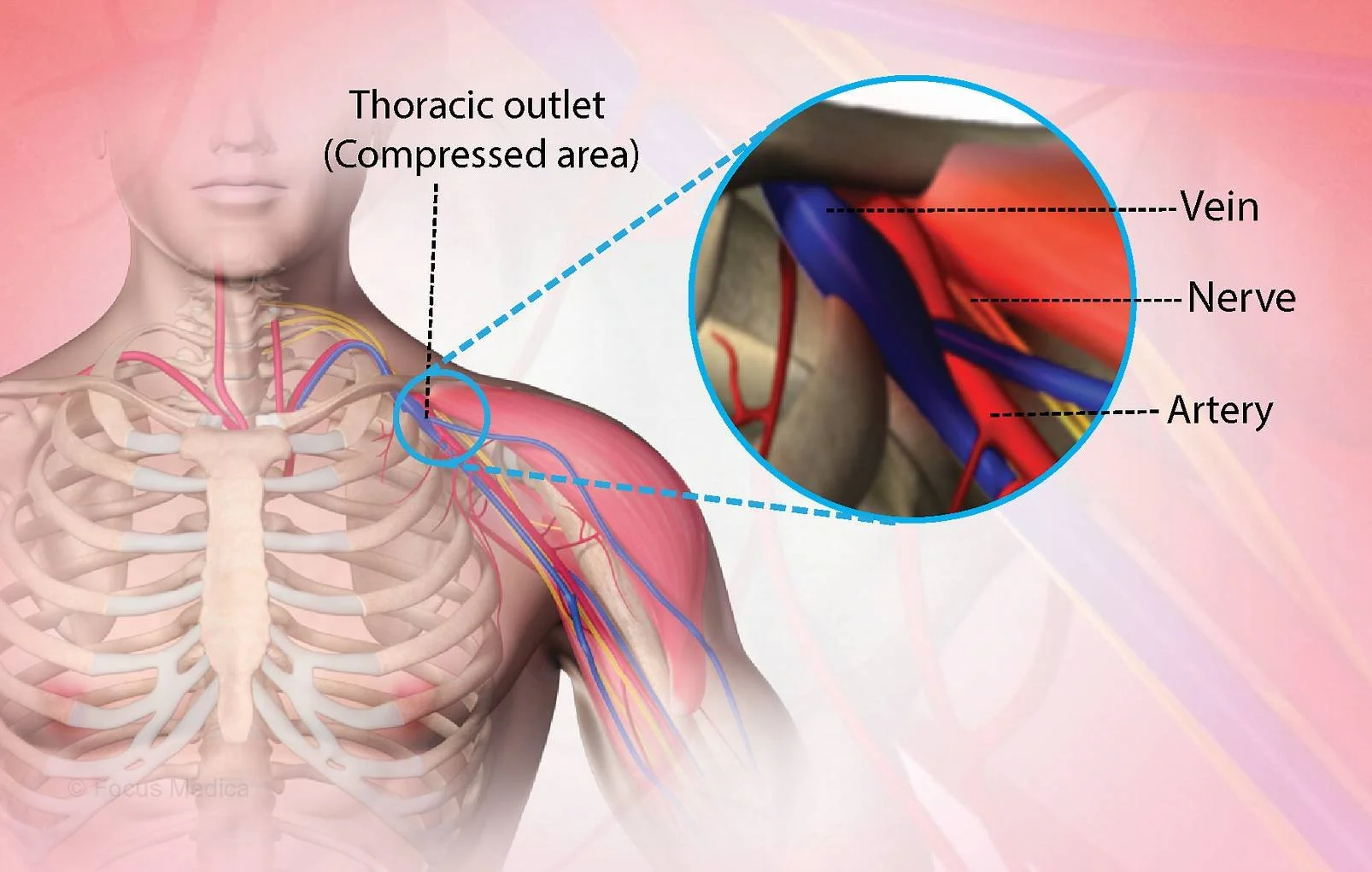
Have you ever experienced persistent pain, numbness, tingling, or weakness in your neck, shoulders, arms, or hands? These symptoms can sometimes be associated with Thoracic Outlet Syndrome (TOS), a group of conditions involving compression or irritation of nerves or blood vessels in the space between the neck and upper chest.
TOS can affect people in different ways, depending on which structures are involved. In this article, we’ll look at the common symptoms and causes of TOS, the different types of the condition, and how a manual osteopathic assessment may fit into a broader approach to managing related discomfort and movement restrictions.
If you're experiencing pain in more than one area and aren't sure where to start, you may also find our broader guide to body pain helpful for understanding how different musculoskeletal concerns can overlap.
What Is Thoracic Outlet Syndrome?
The thoracic outlet is a small passageway between the lower neck and upper chest, near the collarbone and first rib. Important nerves and blood vessels pass through this area on their way to the arm and hand.
Thoracic Outlet Syndrome occurs when one or more of these structures become compressed or irritated. Depending on what is affected, symptoms may include pain, numbness, tingling, weakness, swelling, heaviness, or changes in the temperature or colour of the hand or arm.
Because these symptoms can overlap with other neck, shoulder, nerve, or circulation problems, having the right assessment is important rather than assuming that every case of arm or shoulder pain is TOS.
What Are the Symptoms of TOS?
TOS symptoms can vary considerably from person to person. They may also become more noticeable during certain arm positions or repetitive activities.
Common symptoms can include:
Pain in the neck, shoulder, upper chest, arm, or hand
Numbness or tingling in the arm or fingers
Weakness or fatigue in the arm or hand
A feeling of heaviness in the affected arm
Swelling in the arm or hand
Changes in skin colour
A hand or arm that feels unusually cold
The particular combination of symptoms can provide clues about whether nerves, veins, or arteries are involved. This is one reason why persistent or concerning symptoms deserve proper medical assessment.
What Causes Thoracic Outlet Syndrome?
There isn't always one single cause of TOS. Some people have anatomical variations that make the space around the thoracic outlet narrower. Others develop symptoms following an injury, repetitive movement, or prolonged strain around the neck and shoulder area.
Some factors that may be associated with TOS include:
Anatomical variations, such as a cervical rib
Neck or upper-body injuries
Repetitive overhead movements
Activities that place repeated strain on the shoulders and arms
Postural and movement patterns that may increase pressure in the area
For example, someone who spends long hours at a desk, works with their arms overhead, regularly carries heavy loads, or participates in repetitive upper-body sports may place repeated stress on the structures around the thoracic outlet.
That doesn't mean poor posture or one specific activity automatically causes TOS. Rather, these factors may contribute to symptoms in someone who is already susceptible.
What Are the Different Types of TOS?
Healthcare professionals generally classify Thoracic Outlet Syndrome according to the structure being compressed. The three main types are neurogenic, venous, and arterial TOS.
Neurogenic TOS
Neurogenic TOS involves compression or irritation of nerves, particularly the brachial plexus. It can cause pain, tingling, numbness, or weakness affecting the neck, shoulder, arm, or hand.
Venous TOS
Venous TOS involves compression of a vein near the collarbone. Symptoms may include swelling, heaviness, pain, or a change in the colour of the affected arm or hand.
Arterial TOS
Arterial TOS involves compression of an artery. Possible symptoms include a cold hand, changes in skin colour, pain, or changes in the pulse.
Venous and arterial symptoms are particularly important because problems involving blood flow can require medical evaluation and, in some cases, more urgent treatment.
How Manual Osteopathy May Support Someone With TOS

Manual osteopathy offers a hands-on approach that looks at movement, muscle tension, joint mobility, and how different areas of the body work together.
For someone with symptoms that have been medically assessed and are appropriate for conservative care, an osteopathic practitioner may consider several areas during an assessment.
Postural and Movement Assessment
The position and movement of the neck, shoulders, upper back, ribs, and arms can all be relevant when someone is experiencing upper-body symptoms. An assessment can help identify movement restrictions or patterns of muscular tension that may be contributing to discomfort.
Soft Tissue Techniques
Tension in the muscles around the neck, chest, shoulders, and upper back may affect comfort and movement. Gentle soft tissue techniques may be used to reduce muscular tension and support more comfortable movement.
Joint Mobility
Restricted movement around the ribs, upper spine, shoulder, or other nearby joints may be considered as part of an overall assessment. Gentle manual techniques may be used when appropriate to support mobility.
This whole-body perspective is also relevant to other musculoskeletal concerns. For example, people who experience persistent neck tension may already be dealing with factors such as desk work, screen use, or prolonged static positions, which are discussed in our article on neck pain.
Nerve-Related Symptoms
When numbness, tingling, or weakness is present, the first priority should be understanding what is causing those symptoms. Manual techniques should be selected only when appropriate after assessment, rather than assuming that nerve-related symptoms are simply caused by muscle tension.
Lifestyle and Ergonomic Considerations
Depending on the individual's situation, an osteopathic practitioner may also discuss everyday factors such as workstation setup, repetitive movements, lifting habits, exercise, or ways of taking regular movement breaks.
The goal is not simply to work on the area that hurts, but to understand the person's movement patterns and overall presentation before deciding whether manual osteopathy is appropriate.
When Should You See a Doctor First?
Because TOS can sometimes involve nerves or blood vessels, it is important not to assume that manual therapy is always the right first step.
Medical assessment is particularly important if you have symptoms such as sudden swelling in one arm, significant changes in skin colour, a cold hand, a weak or absent pulse, severe or rapidly worsening pain, or unusual weakness in the hand or arm.
Sudden arm swelling combined with colour changes, severe hand or finger pain, or a cold, pale hand can be signs of a circulation problem that needs urgent medical attention. Sudden shortness of breath, chest pain, or coughing up blood also requires emergency medical care.
If you're unsure whether your symptoms could be related to TOS, it is better to have them assessed rather than trying to self-diagnose the condition.
How TOS Can Overlap With Other Musculoskeletal Problems
One reason TOS can be difficult to recognize is that some of its symptoms can look similar to other conditions affecting the neck, shoulders, or upper body.
For example, someone may initially notice neck or shoulder discomfort and assume that it is simply related to desk work or posture. Others may experience symptoms alongside more general musculoskeletal pain. Our article on back pain explores another example of how pain can involve several contributing factors rather than one isolated structure.
The same principle applies to joint-related discomfort. If your symptoms also involve persistent joint pain or stiffness, our articles on arthritis and osteoarthritis cover those concerns in more detail.
Jaw, Neck and Upper-Body Tension Can Be Connected
The body does not always experience musculoskeletal tension in neatly separated areas. Jaw tension, headaches, neck discomfort, and posture can sometimes occur together, which is why a broader assessment may be useful when symptoms extend beyond one location.
For example, GoldenCare's discussion of the jaw, headaches, and posture connection looks at how these areas can interact. For people who also experience clicking or popping in the jaw, there is a separate discussion of jaw clicking.
And if you regularly clench or grind your teeth, particularly during stressful periods or sleep, our article on teeth clenching and grinding explores that issue from a musculoskeletal perspective.
These conditions are not the same as TOS, but looking at the broader pattern can sometimes help explain why a person may experience tension in several connected areas.
What Can You Expect From an Osteopathic Assessment?
An osteopathic assessment typically begins with a conversation about your symptoms, when they started, what makes them better or worse, and how they affect your everyday activities.
The practitioner may then look at movement and areas such as the neck, shoulders, upper back, ribs, and arms, depending on your symptoms.
This assessment is important because the same symptom can have different causes. The purpose is not to assume that every symptom comes from one particular structure, but to understand whether manual osteopathy is appropriate and whether another healthcare professional should be involved.
TOS is also one of the many situations in which osteopathic care may be considered as part of a broader approach to musculoskeletal health. You can see how TOS fits into the wider range of osteopathy use cases covered by GoldenCare.
Frequently Asked Questions About TOS and Manual Osteopathy
Can manual osteopathy help with TOS?
Manual osteopathy may be considered as part of conservative care for some people, particularly when symptoms have been appropriately assessed and there are movement or musculoskeletal factors that can safely be addressed. It should not replace medical assessment when nerve or blood-vessel involvement is suspected.
Is TOS caused by poor posture?
Posture may be one contributing factor, but TOS can have several possible causes, including anatomical variations, injury, and repetitive movements. Poor posture alone does not mean that someone has TOS.
Does TOS always cause numbness?
No. Symptoms vary depending on the type of TOS and the structures involved. Some people experience pain or tingling, while others may have weakness, swelling, heaviness, coldness, or colour changes in the affected arm or hand.
Should I see a doctor before seeing an osteopath for suspected TOS?
If you have persistent symptoms, especially numbness, weakness, swelling, colour changes, coldness, or other concerning signs, medical assessment is a sensible first step. Once serious causes have been considered and conservative care is appropriate, manual osteopathy may be considered as part of an individualized plan.
Could Manual Osteopathy Be Appropriate for Your Symptoms?
If you've been experiencing ongoing neck, shoulder, arm, or hand symptoms and you're not sure what is contributing to them, the first step is understanding what you're dealing with.
Manual osteopathy may be useful for some musculoskeletal components of a person's symptoms, but the right approach depends on the individual and the underlying cause. A careful assessment can help determine whether manual osteopathy is appropriate or whether another type of healthcare evaluation would be more suitable.
At GoldenCare Wellness in Vancouver, our approach is individualized and focused on understanding the person rather than treating a symptom in isolation.
Book an appointment if you would like to discuss your symptoms and whether manual osteopathy may be appropriate for you.
Educational Disclaimer:
The information shared in this article is for educational purposes and to help you better understand your body, health, and overall wellness. It is not intended to replace medical advice, diagnosis, or treatment. If you have persistent or concerning symptoms, please consult a qualified healthcare professional.