Is Back and Pelvic Pain During Pregnancy Normal?
Pregnancy is an exciting time filled with emotional and physical change.
Your baby grows, your muscles, joints, ligaments, and posture continuously adapt to support both you and your developing child.
Because of these natural changes, back and pelvic pain during pregnancy are among the most common concerns expectant mothers experience. For some women, the discomfort is mild and occasional. For others, it may interfere with sleep, walking, or everyday activities.
The reassuring news is that mild back and pelvic discomfort are extremely common during pregnancy and in many cases, they reflect the body's normal physical adaptation to pregnancy.
Understandingwhy these changes happen, knowing which symptoms are considered normal, and recognizing when it's appropriate to seek professional guidance can help you feel more confident throughout your pregnancy.
Many women are surprised to discover that discomfort isn't always caused by the area that hurts most. During pregnancy, changes in posture, balance, breathing, and movement can influence how different parts of the body work together.
This whole-body perspective is one of the reasons many expectant mothers choose to learn more about how Manual Osteopathy may support comfort during pregnancy.
Why Do Back and Pelvic Pain Happen During Pregnancy?
Pregnancy asks your body to adapt in remarkable ways. As your baby grows, your centre of gravity gradually shifts forward. To stay balanced, your spine, pelvis, and surrounding muscles naturally adjust their position and movement.
At the same time, hormones such as relaxin contribute to increased ligament laxity, particularly around the pelvis, helping prepare the body for childbirth. While this increased flexibility is a normal part of pregnancy, it may also affect stability around certain joints, causing nearby muscles to work harder than usual.
Together, these normal changes may contribute to:
Low back discomfort
Pelvic girdle pain
Hip discomfort
Muscle tightness
Fatigue after standing or walking
Increased pressure around the sacroiliac (SI) joints
Every pregnancy is different. Some women experience only occasional stiffness, while others notice discomfort when climbing stairs, rolling over in bed, standing for longer periods, or walking.
Importantly, the intensity of pain doesn't always reflect the health of your pregnancy. Many healthy pregnancies include episodes of back or pelvic discomfort as the body continues to adapt.
Your Body Is Constantly Adjusting
Throughout pregnancy, your body isn't simply carrying extra weight. Your posture changes, your muscles begin working differently, and your movement patterns gradually adapt to support your growing baby.
These adjustments happen gradually, which is why discomfort often develops over time rather than appearing suddenly.
As pregnancy progresses, the growing uterus can also influence how the diaphragm, rib cage, and breathing mechanics function. The rib cage may gradually adapt as the body makes room for these changing demands, while the diaphragm and surrounding muscles continue to contribute to breathing and postural support.
These changes do not happen in isolation. The way you breathe, sit, stand, and move can all influence how different parts of the body work together as pregnancy progresses.
This ability to adapt reflects the body's remarkable capacity to maintain holistic balance as it responds to the physical demands of pregnancy.
What's Considered Normal During Pregnancy?
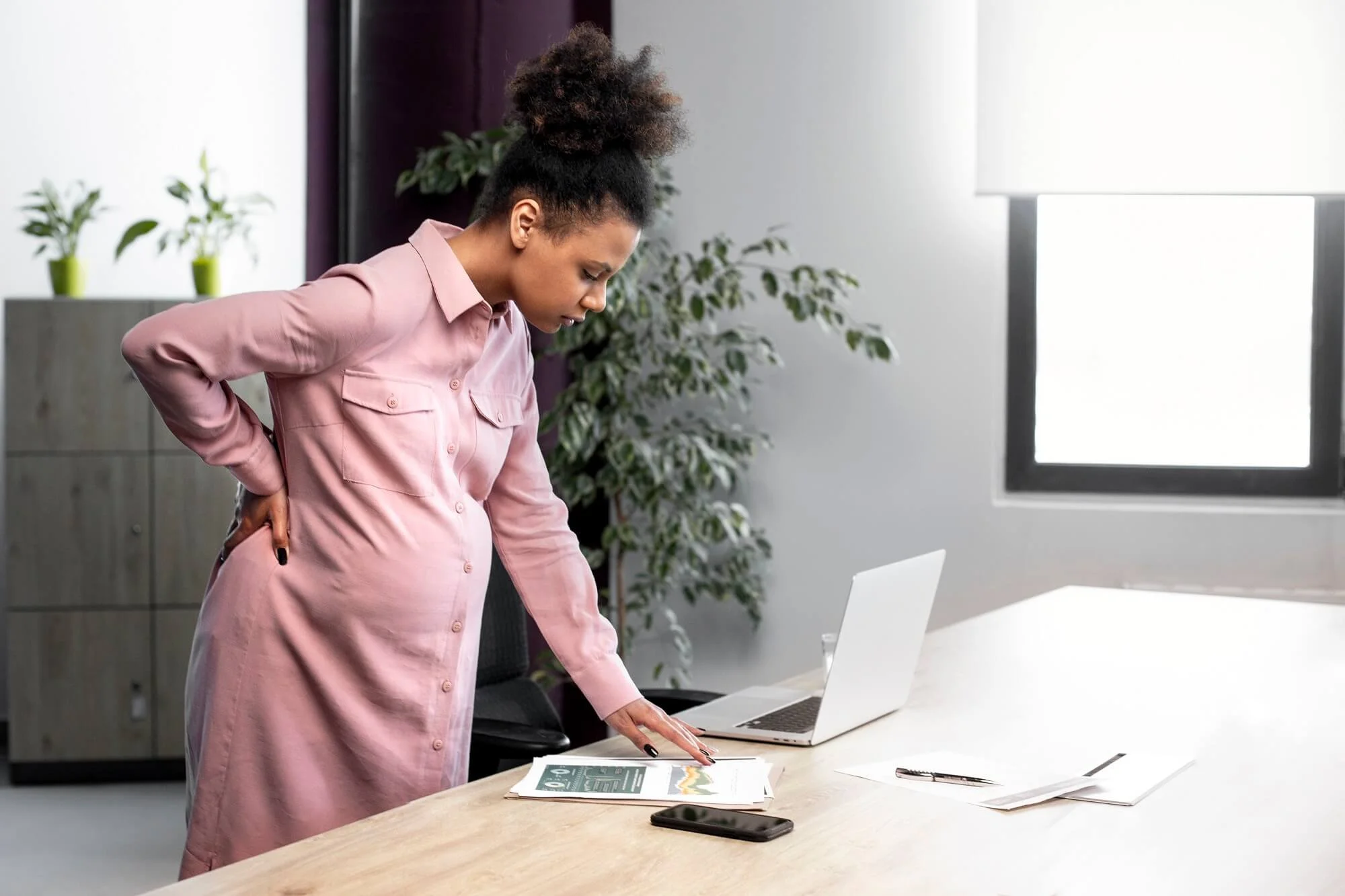
Many women worry that every new ache means something is wrong. Fortunately, that's rarely the case.
Some of the most common pregnancy-related discomforts include:
Mild to moderate low back pain
Pelvic discomfort when changing positions
A feeling of heaviness around the hips
Muscle fatigue after prolonged standing
Morning stiffness that improves with movement
Discomfort that comes and goes throughout the day
These symptoms often fluctuate as pregnancy progresses. It's common to feel better on some days than others.
Rather than trying to eliminate every ache, the goal is to help your body adapt as comfortably as possible.
Simple adjustments in posture, daily movement, sleeping position, and breathing habits can often make everyday activities feel much more comfortable.
Understanding Different Types of Pregnancy-Related Pelvic Pain
Pelvic pain can feel different from one woman to another. It may be felt in the lower back, hips, groin, or front of the pelvis, and some movements or daily activities may make it more noticeable.
Sacroiliac Joint Discomfort
The sacroiliac (SI) joints connect the lower spine to the pelvis. Changes in posture and the way your body moves during pregnancy may contribute to discomfort in this area. Some women notice it more when walking, climbing stairs, standing for a long time, or turning in bed.
Pelvic Girdle Pain and Pubic Symphysis Discomfort
Some women feel discomfort around the front or back of the pelvis, including around the pubic symphysis. It may become more noticeable when walking, getting in and out of a car, climbing stairs, or turning in bed.
Round Ligament Discomfort
As the uterus grows, the round ligaments supporting it stretch. This can sometimes cause a brief sharp or pulling sensation in the lower abdomen or groin, especially when standing up quickly, coughing, or changing position.
Hip-Related Discomfort
Changes in posture and the way your body carries weight during pregnancy can also contribute to hip discomfort. Some women notice aching or tightness after walking, standing for a long time, or sleeping in one position.
These types of discomfort can sometimes overlap, and the same symptom may have different causes. If pain is severe, persistent, or getting worse, or if it makes it difficult to move, speak with your healthcare provider.
When Is It Time to Seek Professional Support?
Although many aches are considered a normal part of pregnancy, persistent or worsening pain shouldn't simply be ignored.
Signs That Deserve Attention
Consider speaking with your healthcare provider if you experience:
Pain that becomes progressively worse
Difficulty walking because of pain
Discomfort that regularly interrupts your sleep
Symptoms that significantly limit your daily activities
Pain accompanied by numbness, weakness, or other concerning symptoms
A qualified healthcare professional can help determine whether your symptoms are part of the normal physical changes of pregnancy or whether additional assessment is appropriate.
For many women, receiving guidance early makes it easier to stay active, move comfortably, and continue enjoying pregnancy with greater confidence.
How Can Manual Osteopathy Support Comfort During Pregnancy?
Every pregnancy is different, which means there is no single approach that works for everyone.
Rather than focusing only on the area where discomfort is felt, Manual Osteopathy begins with a thorough assessment of how your body is moving as a whole. Pregnancy changes the way muscles, joints, breathing patterns, and posture work together, so understanding these relationships often provides a more complete picture of what your body is experiencing.
The goal isn't to "correct" pregnancy, your body is doing exactly what it was designed to do. Instead, the focus is on supporting comfortable movement, improving overall body mechanics, and helping you adapt to these physical changes as naturally as possible.
Many women seek Manual Osteopathy for concerns such as:
Persistent low back discomfort
Pelvic girdle pain
Hip tightness
Rib discomfort as the baby grows
General muscular tension
Reduced mobility during daily activities
Each assessment is tailored to the individual. Factors such as your stage of pregnancy, daily routine, previous injuries, and current symptoms all help shape an approach that reflects your unique circumstances.
Read more: 16 common reasons people choose Manual Osteopathy
Simple Daily Habits That May Help Reduce Pregnancy Discomfort
Professional support is only one part of caring for your body during pregnancy. Small changes in everyday habits often make a noticeable difference over time.
Keep Moving: Gently and Regularly
Unless your healthcare provider has advised otherwise, gentle movement is usually more beneficial than remaining inactive.
Short walks, changing positions regularly, and simple mobility exercises may help reduce stiffness while encouraging healthy circulation.
Your body generally responds better to frequent, comfortable movement than to staying in one position for long periods.
Avoid standing on one leg when getting dressed, as this may increase stress across the pelvis in some women.
Pay Attention to Your Sitting Posture
As pregnancy progresses, it's common to spend more time sitting while working, driving, or resting.
Rather than trying to "sit perfectly straight," aim for a position that feels balanced and relaxed. Sitting close enough to your desk to comfortably support your forearms, keeping both feet supported, and avoiding prolonged static positions may reduce unnecessary strain on your lower back.
If you spend many hours sitting each day, changing position regularly is often just as important as finding the "perfect" posture.
Read more: desk work and neck & shoulder tension
Prioritize Comfortable Sleep Positions
Finding a comfortable sleeping position becomes increasingly challenging as pregnancy progresses.
Many women find that sleeping on their side with a pillow between the knees—or additional support beneath the abdomen—helps reduce tension around the lower back and pelvis.
If discomfort regularly interrupts your sleep, discussing it with an appropriate healthcare professional may help you identify practical adjustments to make sleeping more comfortable.
Supporting Your Body Through Every Stage of Pregnancy
No two pregnancies are exactly alike. The changes your body experiences during the first trimester are very different from those of the third, and your needs often evolve as pregnancy progresses.
Listening to your body, staying active within your comfort level, and seeking appropriate guidance when discomfort begins interfering with daily life can all contribute to a more positive pregnancy experience.
For many women, feeling supported isn't simply about reducing discomfort; it's about moving with greater confidence, maintaining everyday activities, and preparing the body for the months ahead.
For parents curious about continuing this gentle, whole-body approach after birth, our guide to infant and child osteopathy covers what that looks like for your baby.
Many women include Manual Osteopathy as part of their overall pregnancy wellness support, always alongside appropriate medical care throughout pregnancy.
This is just one part of a wider picture of women's health that changes throughout life, something we explore more fully in our guide to osteopathy for women's health.
Frequently Asked Questions About Back and Pelvic Pain During Pregnancy
Every pregnancy is different, and questions about back and pelvic pain are common. Here are answers to some of the questions expectant mothers ask most often.
Is back pain normal during pregnancy?
For many women, yes. Mild to moderate back discomfort is one of the most common physical changes during pregnancy as the body adapts to support a growing baby. However, pain that becomes severe, persistent, or significantly affects your daily activities should always be discussed with a qualified healthcare provider.
What causes pelvic pain during pregnancy?
Pelvic discomfort can develop as hormones increase ligament flexibility, posture changes, and the growing baby places additional demands on the pelvis and surrounding muscles. Every pregnancy is different, so the cause and intensity of symptoms can vary from person to person.
Can Manual Osteopathy be performed during pregnancy?
Many Manual Osteopaths provide care for pregnant women using techniques that are adapted to each stage of pregnancy. A thorough assessment is always performed first to determine whether care is appropriate for your individual circumstances.
When should I seek professional support for pregnancy back or pelvic pain?
If pain is becoming progressively worse, affecting your ability to sleep, walk, work, or perform everyday activities, it's worth speaking with your healthcare provider or another qualified healthcare professional for further assessment.
Can improving posture help reduce pregnancy discomfort?
Maintaining comfortable movement habits, avoiding prolonged static positions, and making small adjustments to posture throughout the day may help reduce unnecessary strain on the back and pelvis. Every person's body responds differently, so individualized advice is often most helpful.
Can Manual Osteopathy replace prenatal medical care?
No. Manual Osteopathy is not a replacement for prenatal medical care. It is intended to complement the care provided by your physician, midwife, or other healthcare professionals throughout pregnancy.
Every Pregnancy Is Unique And So Is Every Body
Pregnancy is a time of constant change. While back and pelvic discomfort are common, your experience will never be exactly the same as someone else's.
Understanding how your body is adapting—and recognizing when additional support may be helpful—can make pregnancy feel less overwhelming and more manageable.
If you're experiencing discomfort that's affecting your daily activities, sleep, or overall well-being, speaking with a qualified healthcare professional can help you better understand the options available to you.
At GoldenCare Wellness, every pregnancy assessment begins with listening. Our goal is to understand how your body is adapting, answer your questions, and provide individualized hands-on care that supports comfortable movement throughout pregnancy.
If you'd like to learn whether Manual Osteopathy may be appropriate for your pregnancy, we're happy to help.
Educational Disclaimer:
The information shared in this article is for educational purposes and to help you better understand your body, health, and overall wellness. It is not intended to replace medical advice, diagnosis, or treatment. If you have persistent or concerning symptoms, please consult a qualified healthcare professional.