Digestive Issues and Osteopathy: What May Help
Digestive discomfort, bloating, sluggishness, a general sense that things aren't moving the way they should, is something a lot of people live with quietly. Many people turn to dietary changes first, which makes sense, but the gut doesn't work in isolation. It's closely connected to the spine, the diaphragm, and the nervous system, which is why some people find that a whole-body approach like manual osteopathy adds something diet alone doesn't cover.
If your main concern is specifically constipation, our article on constipation and manual osteopathy goes into more detail on that particular pattern. This article takes a broader look at the gut-body connection as a whole.
Understanding the Gut-Body Connection
The digestive system is closely linked to the musculoskeletal and nervous systems. Restrictions in the spine, diaphragm, or abdomen can affect circulation, lymphatic drainage, and nerve communication in ways that may contribute to digestive discomfort. A sedentary routine plays a role here too, one of several ways modern daily habits show up in the body.
How Manual Osteopathy May Support Digestion
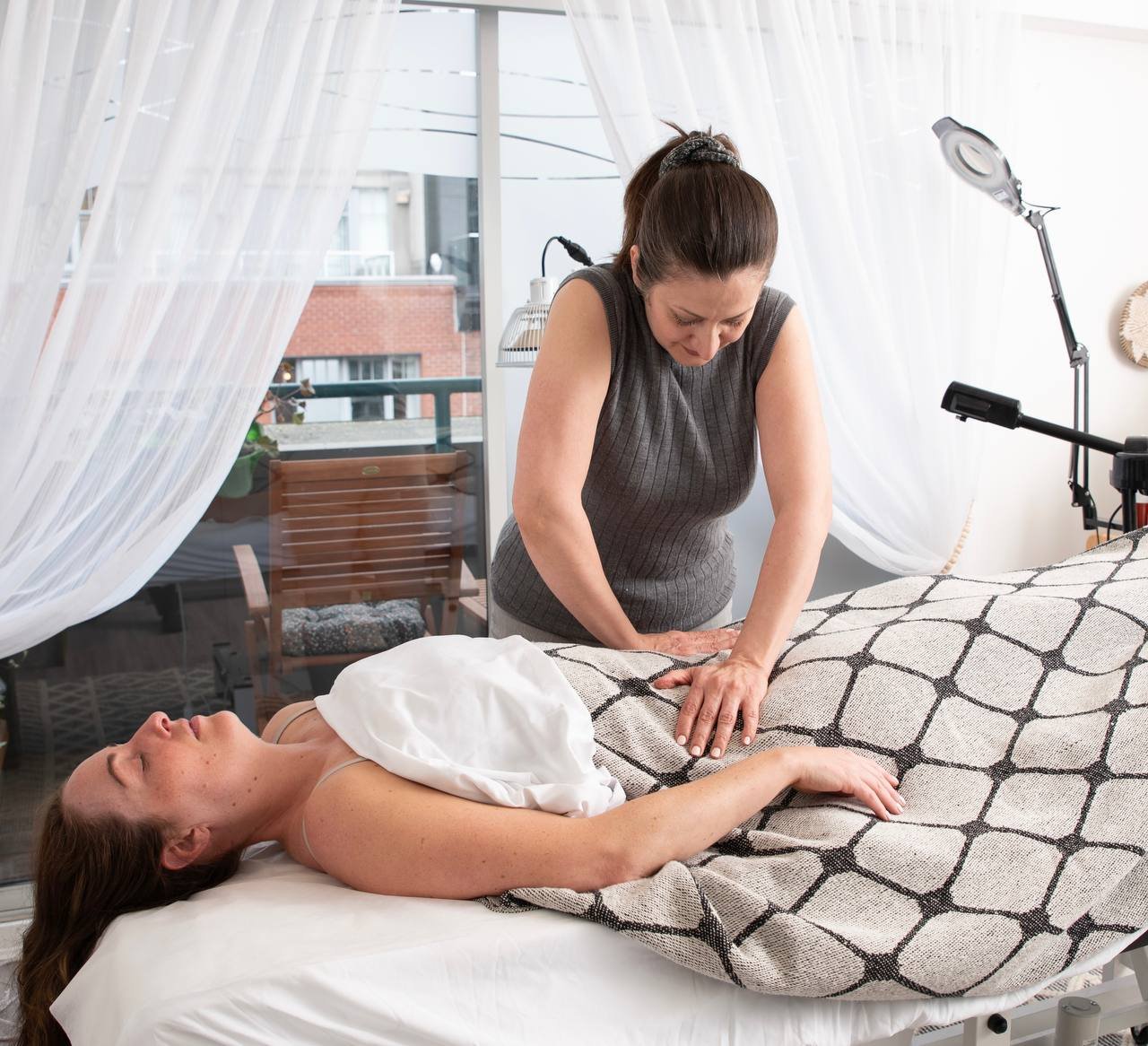
To be clear from the start, manual osteopathy isn't a treatment for digestive conditions themselves, and Osteopathic Manual Practitioners (OMPs) in Canada aren't physicians. They don't diagnose IBS, acid reflux, or other gastrointestinal conditions. What they focus on is the surrounding structures, mobility, tension, and nervous system balance, that may be part of the picture.
Gut Mobility
Gentle visceral techniques focus on the mobility of the abdominal organs themselves, which some people find helpful for a general feeling of sluggishness or bloating.
Abdominal and Diaphragm Tension
Tightness in the diaphragm and abdominal muscles is common, especially with shallow breathing or long hours of sitting. Easing this tension is often part of a session focused on digestive comfort.
Nervous System Balance
The nervous system plays a real role in digestion, and stress in particular tends to show up in the gut as much as anywhere else. Techniques that support overall nervous system balance may help as part of a broader approach to managing stress-related digestive discomfort.
Circulation
Restricted blood flow around the abdomen can play a role in how efficiently the digestive system works. Manual techniques aimed at improving circulation in this area are often part of a session.
Posture
Poor posture and prolonged sitting can compress the abdomen more than people realize. Improving overall posture and spinal mobility is often part of a broader plan for digestive comfort.
When to See a Doctor First
Mild, occasional digestive discomfort is common and often manageable with lifestyle adjustments and supportive care. But some symptoms need medical attention before anything else. Please see a physician promptly if you experience:
Blood in your stool or vomit
Unexplained weight loss
Severe or worsening abdominal pain
Difficulty swallowing
Persistent vomiting
Symptoms that persist for several weeks without improvement
If you've been diagnosed with a condition like IBS or acid reflux, manual osteopathy can be a reasonable addition alongside your medical care, but it isn't a substitute for it.
What to Expect at GoldenCare Wellness
Your first visit starts with a conversation about your symptoms and daily habits, followed by a physical assessment of your posture, spine, and abdomen. If you'd like the full walkthrough before booking, take a look at what to expect at a first osteopathy appointment. Digestive comfort is just one of many everyday situations manual osteopathy is used for.
Frequently Asked Questions
Here are the questions we hear most often from people considering a session for digestive discomfort.
Can osteopathy help with bloating?
Some people find that easing abdominal and diaphragm tension, along with supporting overall mobility, helps with a general feeling of bloating or sluggishness. It works best alongside diet and hydration, not instead of them.
Is this a substitute for seeing a gastroenterologist?
No. If you have a diagnosed digestive condition or symptoms that concern you, a physician or specialist should be your first point of contact. Manual osteopathy can be a helpful addition, not a replacement.
How many sessions are usually needed?
This varies from person to person. Some notice a difference after a few sessions, while others prefer an ongoing routine alongside their other care.
Do I need a doctor's referral to book a session?
No referral is required to book at GoldenCare Wellness. If you have any of the warning signs mentioned above, please see a physician before or alongside booking.
Ready to Support Your Digestive Comfort?
If digestive discomfort has been a quiet, ongoing part of your routine, you don't have to just live with it. A session at GoldenCare Wellness starts with understanding what's really going on in your body, and building a plan from there.
Educational Disclaimer:
The information shared in this article is for educational purposes and to help you better understand your body, health, and overall wellness. It is not intended to replace medical advice, diagnosis, or treatment. If you have persistent or concerning symptoms, please consult a qualified healthcare professional.