Osteopathy for Women's Health: Support Through Every Stage of Life
Over the years, we've had the privilege of working with women through almost every stage of life, teenagers dealing with period pain for the first time, women navigating pregnancy and the exhausting, beautiful mess of the postpartum months, and women in their 40s and 50s noticing their body changing again as they move through perimenopause. Each stage brings its own physical story, and we've learned that a lot of it is connected.
This article walks through the areas of women's health we're asked about most, and how manual osteopathy may fit into each stage.
Period Pain: When It's More Than "Just Cramps"
A lot of women grow up being told period pain is just something to push through. For some, it really is mild and manageable. For others, it's debilitating enough to affect work, school, or basic daily life, and that's worth paying attention to. Painful periods, also called dysmenorrhea, can range from manageable cramps to pain that stops you in your tracks.
There's a meaningful difference between primary and secondary dysmenorrhea. Primary period pain happens without any underlying condition, and it's the type where a small but real body of research suggests manual, hands-on approaches may help reduce pain intensity over a few menstrual cycles. Secondary period pain is caused by something else entirely, like endometriosis or fibroids, and that needs a proper diagnosis from a gynecologist first.
When it comes to primary period pain, we may assess mobility and muscular tension through the low back, hips, and pelvis, depending on your symptoms.
Osteopathy During Pregnancy: Back, Pelvic and Rib Discomfort
Pregnancy changes the body week by week, and it's common to feel unfamiliar aches as your posture, balance, and ligaments all shift to make room for your baby. Many of our pregnant clients come in for low back pain, pelvic discomfort, or rib pain that seemed to appear out of nowhere.
We adapt our prenatal osteopathy approach to each trimester, always working alongside your midwife or OB, never in place of them. If you're curious what this looks like in more detail, we've written more about osteopathy during pregnancy and about back and pelvic pain specifically.
Postpartum Osteopathy: Supporting Recovery After Birth
This is a stage we think doesn't get talked about enough. Your body just did something enormous, and then you're immediately asked to carry a car seat, feed a baby at 3 a.m., and function on almost no sleep. It's a lot to ask of a body that's still healing.
We commonly see new mothers for core and pelvic changes, back and pelvic pain after childbirth, wrist and forearm tension from feeding and carrying, and neck and shoulder pain from hours spent looking down, on top of everything else that comes with caring for a newborn on very little sleep. If you're also looking into gentle care for your baby, our article on infant osteopathy may be useful too.
Pelvic Floor Health: When to Seek the Right Kind of Support
Pelvic floor issues show up in different ways. For some women it's tightness or pain, for others it's leaking when you laugh or sneeze, or a heavy, dragging feeling, and these aren't quite the same thing.
When the issue is tension or tightness, some emerging evidence suggests manual approaches may help. This is an area where we may assess mobility and muscular tension through the surrounding structures, the low back, hips, and pelvis, rather than internal pelvic floor work itself. When the issue is more about weakness, like incontinence or prolapse, the strongest evidence points to targeted pelvic floor exercises and pelvic floor physiotherapy, and that's worth exploring first for those specific concerns.
Either way, if this sounds familiar, it's worth having it properly assessed. Manual osteopathy doesn't replace that assessment, but it can be a helpful part of the picture alongside it, especially for the general tightness that can build up after pregnancy or years of standing and lifting through daily life. Standing a lot, whether for work, chasing kids, or running a household, can also leave legs feeling heavy by the end of the day. If that's familiar, our article on compression socks covers both the benefits and how insurance coverage works in BC.
Perimenopause and Menopause: When Your Body Starts to Feel Different
This transition brings its own set of physical changes: joint stiffness, muscle aches, hot flashes that disrupt sleep, and a general sense that your body doesn't quite respond the way it used to. Hormonal changes during perimenopause and menopause can coincide with new or different joint stiffness and muscle aches for a lot of women, not just in one spot, but seemingly everywhere at once. Some research suggests manual therapy may help ease this kind of musculoskeletal discomfort, though it's an area that still needs more study. If this is where you're at, know that you're not imagining the changes, and we're happy to talk through whether a session makes sense for you.
Staying Active Through Pregnancy, Postpartum and Beyond
A lot of the women we see are also trying to keep some kind of movement, workouts, walking, yoga, weekend hikes, going through pregnancy, postpartum recovery, or just a busy life in general. If you've pushed a bit too hard at the gym or gone back to running before your body was quite ready, soreness that lingers longer than expected is common. When soreness or discomfort lingers, an assessment may help you understand whether it's simply part of recovery or worth looking into more closely. We've written more about what's normal after a hard workout, and what isn't.
Self-Care Isn't a Luxury
Feeling good in your body, including your face, isn't vanity; it's part of how many women care for themselves. Alongside our musculoskeletal work, we also offer facial lymphatic drainage, our Sculptural Face Lifting technique, and our Holistic Buccal Facial for clients interested in that side of things too.
How We Approach Women's Health at GoldenCare Wellness
One of the principles behind how we practise osteopathy is that we're not trying to "fix" the body or force it to change. We focus on helping the body find better balance, improving mobility, reducing unnecessary tension, and addressing areas that may not be working as well together as they could.
The body already has its own capacity to adapt, recover, and heal. We see our role as supporting the conditions that allow those natural processes to work as well as possible.
This is also why we don't think of osteopathy as treating a condition such as menopause, incontinence, or a gynecological disorder itself. Instead, we look at the person as a whole and ask where we can help the body function more comfortably and with less restriction. Sometimes that means working with the low back and pelvis. Sometimes it's the hips, ribs, diaphragm, neck, or other areas that may be contributing to how someone is feeling.
Osteopathy isn't doing the healing for the body. Our approach is to support balance and function, while recognizing that the body has its own remarkable ability to adapt and recover. And when medical assessment or another type of care is needed, osteopathy works alongside it, not in place of it.
A first session starts with a real conversation about what's going on and your health history, followed by a hands-on assessment. From there, we build an approach around your specific stage and symptoms, not a one-size-fits-all routine.
When to See a Doctor First
Please see a physician or gynecologist promptly, rather than booking with us first, if you're experiencing:
Severe or sudden pelvic pain
Heavy or irregular bleeding that's new or unusual for you
Bleeding after menopause
Any concerning symptoms during pregnancy
Signs of infection, such as fever alongside pelvic pain
Pain that's rapidly worsening or unlike anything you've felt before
For the everyday tension and discomfort that often comes with these life stages, manual osteopathy can be a helpful option to explore alongside your medical care.
What to Expect at GoldenCare Wellness
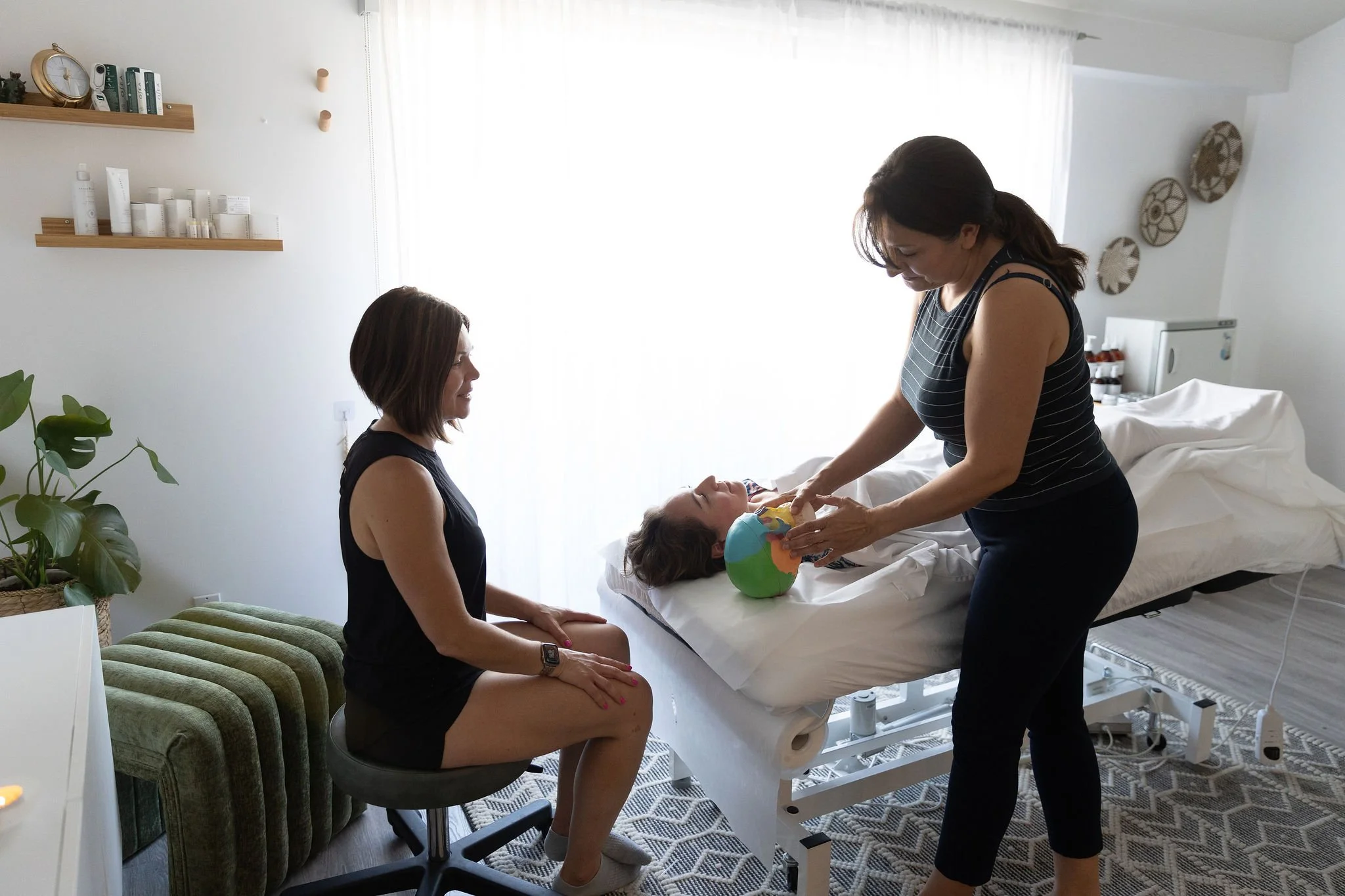
If you'd like the full walkthrough before booking, take a look at what to expect at a first appointment. Women's health is one of the many situations where manual osteopathy may be considered as part of a broader approach to care, alongside the many other everyday situations we help with at the clinic.
Frequently Asked Questions
Here are the questions we hear most often from women considering a session.
Can osteopathy actually help with period pain?
For primary period pain (without an underlying condition), some women find it helpful as part of a broader approach. If your pain is severe or you suspect something like endometriosis, please see a gynecologist first.
Is it safe during pregnancy?
Manual osteopathy can generally be adapted during pregnancy, but suitability depends on your pregnancy and health history. Let your practitioner know how far along you are and share any relevant history so the approach can be adjusted appropriately.
Can osteopathy help with postpartum pain?
Many new mothers find it helpful for back, pelvic, neck, and wrist tension that comes with caring for a newborn. It works alongside your postpartum medical checkups, not instead of them.
Do you treat incontinence or prolapse?
Not directly. These are best addressed with a proper assessment and targeted pelvic floor exercises. For pelvic floor tension or tightness specifically, some emerging evidence suggests manual approaches involving the surrounding low back, hips, and pelvis may help, alongside any pelvic floor care you're receiving.
Can an osteopath help with menopause-related aches and stiffness?
Some women find it helpful for the joint stiffness and muscle aches that can come with perimenopause and menopause, though this is an area where research is still developing. It's worth discussing your specific symptoms during an assessment.
Do I need a doctor's referral?
No referral is required to book at GoldenCare Wellness, unless your extended health insurance specifically requires one for reimbursement, it's worth checking your plan. If you have any of the warning signs mentioned above, please see a physician first.
A Note for Partners
This article is about women's health, but if you're the partner of a woman in your life, whatever stage she's in, gifting her one or a few manual osteopathy sessions at GoldenCare Wellness can be a thoughtful way to support her wellbeing and relaxation.
Read more: Meaningful Wellness Gift Ideas
Ready to Talk Through What You're Feeling?
Whatever stage you're in, you don't have to figure it out alone. If you're dealing with pain, tension, or discomfort related to your menstrual cycle, pregnancy, postpartum recovery, or menopause, you can book a manual osteopathy assessment at GoldenCare Wellness to talk through whether it may be a good fit for your care.
Educational Disclaimer:
The information shared in this article is for educational purposes and to help you better understand your body, health, and overall wellness. It is not intended to replace medical advice, diagnosis, or treatment. If you have persistent or concerning symptoms, please consult a qualified healthcare professional.